Original text:
I begin with a conclusion: the United States of America is nearing a point at which it can no longer be described as a nation-state, in the sense that term is generally used, and is evolving into a different kind of enterprise—one lacking the underpinnings of a common culture, language, religion, or nationality that we commonly associate with modern nation-states.
This is due to several intersecting causes: destructive ideas (identity politics); significant and apparently irresistible developments in the world (globalism and large-scale migration); benign conditions that erode national loyalties (peace and prosperity); and the unique character of the American nation (a nation-state built upon universal principles). These have brought into being new lines of conflict in the United States, with some rallying to preserve an inherited idea of the American nation while others promote the forces that are eroding it. Indeed, America’s two political parties seem to be organizing themselves around this fundamental line of disagreement.
Many say that nationalism is a bad thing—that it is a cause of wars, group hatreds, irrational conflicts, and the like—and that we will live better without it. There is some truth to this. But if nationalism is bad, then so are nations and nation-states. Can we have nations without nationalism? Can we have an American nation absent some sense of American nationalism? Obviously not. While nationalism is sometimes taken too far, it is easy to recognize the vices of nationalism without appreciating its virtues. The United States, with its diversity of geography, conditions, and peoples, would have fallen apart long ago without the idea of a nation to hold it together. As a matter of history, nationalism was held up as the antidote to the tendency of the American union to split up and break apart. As the idea of an American nation retreats, the possibilities for break-up will advance at a similar rate.
Henry Adams wrote, somewhat in jest, that “Politics, as a practice, whatever its professions, has always been the systematic organization of hatreds.” That is not true, at least as regards a successful politics, which depends upon a degree of comity and agreement—if only an agreement to disagree. A polity can function if people disagree with one another, but not if they hate one another. People do not make mutual sacrifices on behalf of enemies. Pluralism is a good thing, up to a point, though it must rest upon an underlying agreement to abide by certain rules and to refrain from carrying things too far. The idea of a nation binds citizens into a common enterprise.
Yet today the United States seems headed in a different direction: toward pluralism without consensus—a nation-state without a national idea—and towards animus among racial, religious, regional, and national groups. It is comforting to think that a “post-national” state will be a utopia of tolerance and understanding. It could turn into something quite the opposite.
Will this new “post-national” state be able to resolve crises and deliver to Americans the kind of freedom and prosperity to which they have become accustomed as citizens of the world’s most successful nation-state? Probably not. Is it still possible to restore the ideal of a single American nation? That remains to be seen.
David C. Hendrickson, in his admirable history of U.S. foreign relations, Union, Nation, or Empire (2009), reminds us that the United States was not conceived in 1776 or 1787 as a nation-state but as a constitutional republic in the form of a union among states. The Founders thought in terms of both republicanism and union, though union proved to be the greater challenge because there existed a consensus at that time around the ideals of republicanism but not in regard to the foundation of a union among the states. Anti-Federalists claimed that a continental republic encompassing so many different states was a pipe dream. Advocates of the Constitution feared that without a stronger government the states might fly off on their own paths or form alliances with European powers. They—the Federalists—barely won the debate in 1787 and 1788 by persuading enough of their peers that the states and their inhabitants would find greater security and prosperity within the union than outside of it.
There was a widespread belief in the early years of the Republic that the Union, with its compromises between federal and state authority, represented a greater contribution to the cause of popular government than any other feature of the Constitution. Most federative systems, ancient and modern, had failed, usually because the parts spun off from the center, as Madison pointed out in making the case for union in Federalist Nos. 18, 19, and 20. The Constitution, and its formula for union, solved this perennial problem by granting the federal government sufficient powers to sustain itself while allowing state governments wide latitude to adjust to local conditions. Nevertheless, the original controversy between Federalists and Anti-Federalists recurred under different guises from 1789 to 1860–61, when the southern states finally seceded from the Union as others had threatened to do on several occasions in the intervening years. The Union, while an object of reverence, was at the same time continuously under threat of breakup, mainly due to the disparity of interests between the North and South.
At the time of the American founding, the empire (not the nation-state) was the established form of political organization over most of the civilized world. The Holy Roman Empire was still intact (although barely), as were the Ottoman and the Russian Empires, both encompassing dozens of national, religious, and ethnic groups. Great Britain and France were well into the process of building their own empires overseas. Empires, as forms of political organization, controlled large land areas, had fluid and unstable boundaries, and were composed of an array of ethnic, religious, and national groups coexisting within loose imperial federations. They were ruled dynastically by emperors, czars, and monarchs. The idea of a nation-state—a territorially large polity with fixed borders and a state representing a culturally distinct people—was yet to be developed as an alternative to empire.
For this reason, there was a marked tendency among members of the founding generation (Jefferson and Madison, principally) to conceive of the American union according to the imagery of empire. The United States, by virtue of the treaty with Great Britain that ended the revolution, acquired a vast expanse of territory west of the Appalachian Valley extending to the Mississippi River. This brought about a far-reaching change in perspective among American leaders. The United States, up to that point a small coastal republic, now had control of territories that dwarfed European states in size and potential bounty.
Jefferson imagined an “empire of liberty,” a boundless territory organized on the principles of republicanism that would stand as a bulwark against European empires looking for opportunities to expand in the Western Hemisphere. He did not necessarily believe that the new republics had to organize themselves as offshoots of the American union but could coexist as independent republics. Later, in 1820, he wrote that the sectional crisis could be resolved by allowing slavery to be “diffused” through the territories where it would no longer represent an overwhelming interest. That formula was rejected by the Missouri Compromise of that year, but resurrected in the 1850s, at which time it further inflamed sectional hostilities.
Jefferson’s vision of an expansion-based agrarian republic conflicted with Hamilton’s hope for a commercial republic, mostly coastal in nature, dependent upon trade with Great Britain, and run from an administrative center in the capital. Jefferson looked westward for the American future, Hamilton to the east, toward Europe, and especially toward Great Britain.
Madison, in making his case for the extended republic in Federalist 10, advanced a different but compatible theory—that by the application of representation and federalism (local self-government) there would be no territorial limits to the American union. Madison reconciled union, republicanism, and expansion within his theory of the extended republic. This was a rebuke to prominent theorists, Montesquieu and Rousseau specifically, who wrote that republics prospered only in small territorial units where citizens thought alike and held the same opinions. By contrast, Madison claimed that the multiplication of interests over a vast territory would be beneficial because such conflicts would cancel out one another and forestall a concentration of power in the capital—thereby preserving the balance between the central government and the constituent states. It might be necessary occasionally for these interests to unite in common cause, though mainly in response to threats from abroad. Otherwise, the self-canceling conflicts held the system in equipoise, not unlike balance of power arrangements in the international system.
Some historians, Jacob Talmon, for example, in The Rise of Totalitarian Democracy (1952), have contrasted these theories with the nationalist ideas of the French Revolution. Madison wrote in The Federalist that, due to the operation of liberty, it would be impossible “to give to every citizen the same opinions, the same passions, and the same interests.” Republican government had to accommodate—indeed, promote—a diversity of opinion and interests. The French revolutionaries thought differently. Jean-Paul Rabaut, one of the moderate leaders in the National Assembly in the early years of the Revolution (subsequently executed in the Terror), declared: “We must make the French a new people. We require an infallible means of transmitting constantly and immediately, to all the French at once, the same uniform ideas.” Abbé Emmanuel Sieyès, another revolutionary theorist, similarly wrote that “All parts of France must be made into a single body, and all the peoples who divide it into a single Nation.” Article three of The Declaration of the Rights of Man and of the Citizen asserts that “The principle of all sovereignty resides essentially in the nation. No body nor individual may exercise any authority which does not proceed directly from the nation.”
Revolutionary leaders sought to purify the French language, eliminate regional governments and loyalties, and construct a national religion as an alternative to Christianity. They thought a “nation” might be built on the model of the Catholic church, with a set of uniform beliefs, a catechism, and secular priests as leaders. The “nation” is “the people,” everyone equal, united in a common outlook, and loyal to one another—and to the nation. “The nation,” as Talmon wrote, “is not the aggregate of men, women, and children but a confraternity of faith.” This is the new language of nations and nation-building—a state linked to a culturally unified public. In contrast to the Americans of that time, the French theorists thought in terms of creating a nation—the first “new” nation built upon popular principles. They failed in this quest, or mostly failed, because a “nation” is a creation of time and events, and cannot be ordered into place all at once.
It was Jefferson’s vision of an “empire of liberty” that prevailed from 1800 to the southern secession in 1860–61. The United States expanded its territory at an exponential rate in that period, thanks to Jefferson and his successors in the Democratic Party: Presidents Madison, Monroe, Jackson, and Polk. The United States doubled in size in 1803 by the Louisiana Purchase, then expanded further with the annexation of Florida and later Texas, then added more territory in the southwest from the war with Mexico, and in the northwest (the Oregon territory) via negotiations with Great Britain. The United States was by 1850 an ocean-bound republic with no obvious end in sight to further expansion.
But no one today looking at a map of the United States as of 1850 would conclude that it resembled a modern nation-state. The country’s borders continually expanded over a fifty-year period due to land purchases, conquests, annexations, and treaties with European empires. The country was equally divided between free and slave states, with new occasions for sectional conflict arising every year, and each side looking for ways to break the stalemate. Those living in the North and the South more and more formed loyalties to their respective sections. People from other countries entered the United States freely and with little regulation because the federal government had yet to seize control of immigration policy from the individual states. The vast interior of the country from the Mississippi River to the Pacific Ocean was mostly open land, yet to be settled and organized. Hostile native tribes occupied large swaths of it and were poised to resist further incursions into their territories. Under such circumstances, the “bonds of union” inevitably frayed.
This was an exceptional polity due to its scale, its popular foundations, its rapid growth, its absence of inherited ranks, and so much more. But what was it: union, republic, or empire—or a combination of all three? Whatever it was, it was not yet a nation.
The United States forged itself into a nation—into a nation-state—over a ninety-year period from 1860 to 1950, an era book-ended by the Civil War and World War II, two great wars for liberal democracy, with World War I sandwiched in between. These were communal events: all Americans participated in one way or another. They called for widespread sacrifice: many thousands were killed, and many more thousands wounded, in conflicts of unprecedented scale. These wars, tragic though they were, assimilated millions of immigrants into the national culture, and they provided momentum for the post-war civil rights movement that sought to integrate African Americans into the nation. If you or your son or daughter or your husband or wife fought for America, then no one could say you were not an American. The experience of war bound Americans into a common national enterprise, creating over the decades an ever more coherent image of an American “people” represented by a national state. If in 1860 the United States was a hybrid of different polities, then by 1950 there is little doubt that it had transformed itself into a modern nation.
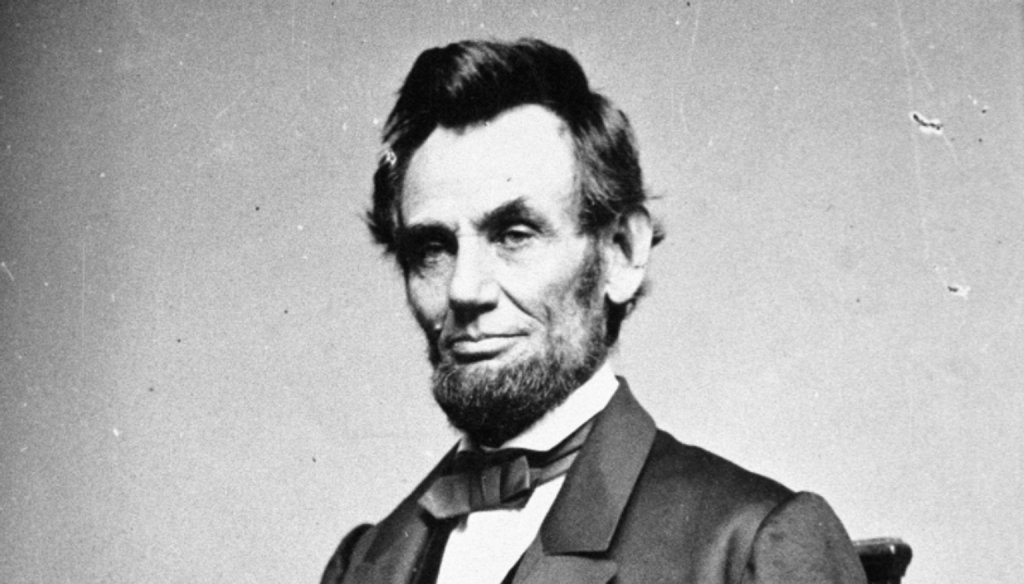
It was Abraham Lincoln who first conceived the idea of an American nation as a solution to the sectional warfare that eventually broke apart the Union. Lincoln began to use the term “nation” as an alternative to “union” early in his career when he saw sectional divisions escalating at the same time as the revolutionary generation had passed away—Madison, the last of the living Founders, died in 1836. Lincoln envisioned a nation held together by a “political religion” based upon reverence for the Founding Fathers, the Constitution, and the Declaration of Independence. During the sectional crisis of the 1850s, he held up the Declaration as “the sheet anchor of American republicanism,” and invoked the Founding Fathers in the campaign to place limits on the expansion of slavery. In the Gettysburg Address he expressed the idea of the nation in semi-religious terms: “Four score and seven years ago our Fathers brought forth on this continent a new nation, conceived in liberty and dedicated to the proposition that all men are created equal.” This was not technically true, since the idea of a nation was yet to be developed in 1776; nonetheless, it was necessary to buttress the idea of a nation by linking it to the hopes of the Founding Fathers. The war, mixed with Lincoln’s leadership and sublime rhetoric, established the idea of an indivisible American nation as anchored in the Declaration and Constitution. This must be counted among his most significant achievements: conceiving and beginning the transition of the United States from union to nation.
This did not happen all at once, since while Lincoln was speaking at Gettysburg half of the nation was still at war with the other half, and a good portion of northern opinion was sympathetic to the South and hostile to Lincoln. He was responsible for the idea of the American nation, though perhaps not for the reality of it. That would be the work of time and events: the development of railroads, highways, and means of communication that cemented the American people and the states with secure and stable borders, along with the wars and conflicts of the first half of the twentieth century that bound Americans together by mutual sacrifices. It is easy to take the nation for granted today, but it was the work of a century, requiring enormous effort and sacrifice that transformed the United States from a hopelessly divided union into the world’s most powerful nation-state.
Because of the central role of the Declaration of Independence in validating the Revolution, and Lincoln’s success in establishing it as the central symbol of American nationality, it is logical to conclude that the United States is a “proposition” nation founded on a commitment to abstract principles (rather than loyalty to cultural, ethnic, or national groups). It is, in Hans Kohn’s terminology, a “civic” nation based upon a civic creed emphasizing liberty and democracy rather than an “ethnic” nation based upon cultural or ethnic loyalties. The United States is held together by loyalty to political institutions and abstract ideals—as in Lincoln’s “political religion.”
This, while largely so, admits of considerable qualification. Beginning in the founding era, Americans were aware that their country had important cultural underpinnings: it was British, English-speaking, and Protestant. Those categories were enlarged during the nineteenth century to include Catholics and non-English speaking Europeans (mostly Germans). There was a racial element, of which everyone was aware. The first Naturalization Act (1790) limited citizenship to members of the white race, an act that was repealed after the Civil War by the Fourteenth Amendment. In 1882, Congress passed the Chinese Exclusion Act, prohibiting the immigration of Chinese laborers, a law that was on the books until 1943 and not fully repealed until 1965. The Immigration Act of 1924, enacted on a bipartisan basis, barred all immigration from Asia and set national quotas favoring immigration from Canada and northern Europe. President Coolidge said when he signed the bill that “We cast no aspersions on any race or creed, but we must remember that every object of our institutions of society and Government will fail unless America be kept American.” As late as 1942 President Roosevelt could say, “The United States is a Protestant country and the Catholics and the Jews are here at their sufferance.” The idea of an American nation, shaped so much by Lincoln’s political religion, also had an unmistakable cultural dimension.
Over the course of the post-war era, the foundations of that American nation have gradually washed away. The Immigration Act of 1965, which repealed the national origins quotas in the 1924 act, opened the country to immigrants from Asia, Africa, and Latin America. The United States is now home to an endless variety of linguistic, religious, and cultural groups. The Protestant, or European, or English-speaking nation is giving way to a multicultural, multilingual, and multinational country in which differences between the new and old groups are celebrated and reinforced. It is no longer possible for the United States to go forward as a “cultural” nation in the form by which it developed between 1860 and 1950. Whether or not this is a good thing is beside the point: it has happened, is happening, and will continue to happen.
As the cultural nation recedes, the United States could go forward as a “civic” nation, on the basis of Lincoln’s “political religion” or loyalty to the nation’s political institutions. In the history of nations, a purely “civic” nation would be something new. The United States, an exceptional nation, might be the first of that kind. Yet the nation’s political ideals, and their associated institutions, have also come under sustained attack by many who celebrate the nation’s growing cultural diversity. They loudly assert that the Founding Fathers were slave owners, and therefore hypocrites; the Declaration of Independence is a fraud; the Constitution favors the rich and stands in the way of needed change; the American past is a tale of oppression, conquest, and environmental degradation. Such views are circulated in America’s schools, colleges, and board rooms, and they are popular among journalists and political activists. Through these attacks, the “civic” nation is disappearing almost as rapidly as the “cultural” nation.
These developments leave the United States without any strong foundations to keep itself together as a political enterprise—in a circumstance when its increasing diversity requires some kind of unifying thread. What will that be? No one now knows. But unless it is somehow found, the United States will be at risk of blowing itself apart in the twenty-first century, as it did once before in the middle of the nineteenth.
SEE FULL ARTICLE in CONTEXT HERE.
Reading notes:
Piereson begins his article by arguing that the United States of America, as a nation-state, is currently undergoing a process of change: it is transforming into a different kind of enterprise, one lacking the foundations of common culture, language, religion or nationality; – it is headed towards PLURALISM WITHOUT CONSENSUS: A NATION-STATE without a national idea – a “post-national” state: one of conflict between political parties, and among racial, religious, regional, and national groups; – a DECLINE of the postwar political consensus; HENCE: “shattered consensus”; – PIERESON is NOT optimistic about this post-national state;
This PROCESS is due to several factors: identity politics, globalization and large scale migration, and the unique character of the American nation (a nation-state built upon universal principles;
These FACTORS have brought about new lines of conflict between those who seek to preserve an inherited idea of the American nation and those who promote the forces that are eroding it. The Republicans and the Democrats seem to be organizing themselves in these two camps. These elements are exercising a centrifugal force that could eventually lead to the disintegration of the US as a nation state;
NATION/NATIONALISM: in this equation, nationalism plays an important part; contrary to common beliefs, Piereson sees the notion of “nation” and “nationalism” as a necessary vice, needed for the unity of the United States – without it, the US as a nation-state would have fallen apart: “nationalism was held up as the antidote to the tendency of the American union to split up and break apart; the idea of “nation” nation is necessary because it binds citizens together into a common enterprise;
Piereson then moves to a historical overview of genesis of the American nation-state: which is to say that THIS CURRENT CRISIS is NOT without PRECEDENT; there were TWO SUCH CRISES before this one:
–> 1776-1781 lasting until 1860-1861: the US was not conceived in 1776 or 1787 as a nation-state BUT as a constitutional republic in the form of a union among states; in this equation, it was the precepts of the UNION that were the most challenging to uphold; anti-federalists claimed that a continental republic encompassing so many different states was a pipe dream; the federalists barely won in this debate; it was the CONSTITUTION, and its compromises, that solved the challenges brought about by the UNION: it granted the federal government sufficient powers to sustain itself while allowing state governments wide latitude to adjust to local conditions; IN THIS PERIOD: the union was under constant threat: for instance, the southern states and others threatened to leave the union on several occasions;
– when this was happening, in other parts of the world, the prevailing form of political organization was the EMPIRE (the Holy Roman Empire, the Ottoman and Russian empires, Great Britain and France were also building their empires overseas); – for this reason, members of the founding generation (Jefferson and Madison) conceived of the American union according to the imagery of empire; JEFFERSON envisioned an “empire of liberty” (which prevailed between 1800 and 1860-1861) in which republics could coexist peacefully (slavery constituted an insurmountable problem to which Jefferson offered no viable solution – it inflamed sectional hostilities such as between north and south); HAMILTON envisioned a “commercial republic” mostly coastal and dependent on trade with Britain; while MADISON envisioned an “extended republic”, one that would mix union, republicanism, and territorial expansion; MADISON claimed, contrary to prominent theorists (such as Montesquieu and Rousseau), that the multiplicity of regional conflicts would cancel each other out, maintaining the system in equipoise; MADISON held that the republican government had to accommodate and promote diversity of opinion and interests;
–> these ideals of multiplicity and inclusion went into sharp contrast with the ideals of the French revolutionists who dreamed of creating a “single body” in religious terms, a nation that would cancel differences and promote the same uniform ideas (“a culturally unified public”);
– THIS PERIOD was also marked by territorial expansion: the Louisiana Purchase (1803); the annexation of Florida and later Texas; more territories were added after the war with Mexico and further negotiations with Britain; by 1859, the United States was an ocean-bound republic with no obvious end in sight to further expansion;
– THIS EXPANSION inevitably led to DIVISION: there were FREE and SLAVE STATES that constantly threatened to break the union; there was no immigration regulation; and the natives were hostile to the newly arrived populations;
– WHAT WAS THE U.S. AT THIS POINT? It was definitely NOT a nation-state;
–> 1861 lasting until the 1950s: in this period, the United States forged itself as a nation-state; an era book-ended (opened and closed) by the Civil War and World War II; WHY? These were communal events: all Americans participated in one way or another; the experience of war BOUND Americans into a common national enterprise thus creating the image of a national state in which even immigrants and African-Americans were assimilated; this crisis created momentum for the civil rights movements that occurred in the years after the Second World War;
– it was ABRAHAM LINCOLN who coined the idea of the American NATION as a solution to the sectional warfare that threatened to break the union apart; he used it instead of UNION; he envisioned a NATION held together by a “political religion” based on respect for the Founding Fathers, the Constitution, and the Declaration of Independence; in the Gettysburg Address he expressed the idea of the nation in quasi-religious terms; he linked it to the hopes of the Founding Fathers; the war crystalized the idea of an indivisible American nation anchored in the Declaration and Constitution; IT WAS LINCOLN WHO BEGAN THE TRANSITION OF THE U.S. FROM UNION TO NATION;
– at the end of this transition, the U.S. became a “proposition” nation or a “civic” nation grounded in abstract principles such as liberty and democracy rather than in loyalty to cultural, ethnic, or national groups;
– HOWEVER, Piereson argues, this “civic” nation, as envisioned by Lincoln’s “political religion” is not entirely free of cultural dimensions; the laws that underpinned it had a cultural element to them: the first Naturalization Act (1790) excluded non-whites from citizenship; the Chinese Exclusion Act (1882) prohibited the immigration of Chinese workers, the Immigration Act of 1924 set national quotas favoring immigration from Canada and northern Europe;
–> returning to his initial argument, Piereson argues that it is no longer possible for the U.S. to go forward as a nation in the form by which it developed between 1860 and 1950; it could go forward as a “civic” nation, loyal to its political institutions (as Lincoln had envisioned it); YET, these institutions have also come under heavy attack by those who celebrate the nation’s growing cultural diversity; all these elements have destabilized the U.S. as a nation and could lead to its disintegration if a unifying thread is not found;
Summary of “The Idea of an American Nation” by James Piereson
In “The Idea of an American Nation”, James Piereson argues that the United States of America, as a nation-state, is currently headed towards a “pluralism without consensus”: a “post-national” state defined by conflict between political parties and among racial, religious, and national groups. This decline of the postwar political consensus is due to several factors: identity politics, globalization, large scale migration, and the uniqueness of the American nation as a nation-state built upon universal principles, such as liberty and democracy. Piereson sees these factors as exercising a centrifugal force that could eventually lead to the disintegration of the U.S. as a nation state.
This decline is comprehensively described in Piereson’s book Shattered Consensus. Published in 2015, when Donald Trump was beginning his ascent to the presidency of the United States, the book held a distressing thesis. The American nation, Piereson argued, was headed into a period of instability of upheaval because the political consensus holding the United States together through the postwar era was coming apart. That political consensus had been shaped in the aftermath of the Second World War, and it defined the role of the federal government in maintaining full employment at home and for policing the world in the interests of democracy, trade, and national security.
However, this crisis is not without precedent. In fact, Piereson argues that the United States has had two other such chapters in its history, out of which the U.S. emerged as something different.
The FIRST, which Piereson calls “the Jefferson–Jackson era,” began in 1776 and lasted until 1861, when slavery and related territorial issues broke the prevailing consensus apart. What is striking about this period, Piereson points out, is that the U.S. was not conceived in 1776 or 1787 as a nation-state but as a constitutional republic in the form of a union among states. This was primarily because at that time the nation-state did not exist in theory and the prevailing form of political organization was the empire. The rest of the world was dominated by established empires such as the Holy Roman Empire, the Ottoman and Russian empires, and nascent empires such as the French and British ones.
For these reasons, members of the founding generation such as (Thomas) Jefferson, (James) Madison, and (Alexander) Hamilton conceived of the American Union according to the imagery of empire. Thus, Jefferson envisioned an “empire of liberty” (which prevailed between 1800 and 1861) in which the various republics could coexist peacefully. While Madison imagined an “extended republic,” one that would mix union, republicanism, and territorial expansion. In his view, it was the duty of the republican government to accommodate and promote diversity of opinion and interests. Lastly, Hamilton pictured a “commercial republic” which was mostly coastal and depended primarily on trade with Britain.
This period was also marked by territorial expansion which inevitably led to further division. Thanks to the Louisiana Purchase (1803), the annexation of Florida and later Texas, and other territories annexed after the war with Mexico and negotiations with Britain, the United States became a republic whose seemingly infinite territorial vastness could only be matched by its political ambitions. But this vast territory was also home to what seemed insurmountable conflicts. In it, there were free and slave states, hostile natives, and immigration was unregulated.
In this equation, it wasn’t the precepts of republicanism that were difficult to uphold, but rather those of UNION, which were under constant threat. Southern anti-federalists, who had threatened to leave the union on several occasions, claimed that a vast continental republic containing so many different states was unviable. While federalists found it difficult to demonstrate that forming and staying in a UNION had more advantages than disadvantages.
What was the solution to this conundrum? It was the CONSTITUTION, and its compromises, that solved the challenges the UNION was facing. It allowed local governments the freedom to adjust to regional conditions while granting the federal government sufficient powers to remain stable.
The SECOND crisis began roughly around 1861 and lasted until the 1950s, during which the United States forged itself as a nation-state and at the end of which it emerged as the postwar welfare state that we know today. The idea of the United States as a “nation” first crystallized in Abraham Lincoln’s Gettysburg Address (1863), whereby he envisioned a NATION held together by a “political religion” based on the veneration for the Founding Fathers, the Constitution (1789), and the Declaration of Independence (1776). To him, the NATION, and not the UNION, was the solution to the sectional warfare that had threatened to break the union apart.
What is particularly interesting about this period is that it was opened and closed by the Civil War and the Second World War respectively. Why is that? It’s because wars are communal events: all Americans participated in these wars in one way or another, and their willingness to sacrifice for a common goal, namely the safeguarding of liberty and other American values, proved once and for all that they were undeniably American. It was the experience of the Second World War that bound Americans into a common national enterprise and created the image of a national state in which even immigrants and African Americans had to be assimilated. They had fought in the wars after all, they were Americans.
At the end of this transition, Piereson argues, the U.S. became a “proposition” or a “civic” nation, namely one grounded in abstract principles such as liberty and democracy rather than loyalty to cultural, ethnic, or national groups. However, Piereson also claims that this “civic” nation, as pictured by Lincoln’s “political religion,” was not entirely free of cultural dimensions. It was open to all, but excluded non-white from citizenship through the first Naturalization Act (1790); it prohibited the immigration of Chinese workers with the Chinese Exclusion Act (1882), and it set national quotas favoring immigration from Canada and northern Europe through the Immigration Act of 1924.
Returning to his initial argument, Piereson argues that it is no longer possible for the U.S. to move forward as a nation in the form by which it developed between 1860 and 1950. Given its exceptionalism, the U.S. could become a purely “civic” nation, loyal to its political institutions, but these institutions have also been subjected to a spate of attacks from those who celebrate the nation’s evolving cultural diversity. All these attacks, Piereson concludes, have destabilized the U.S. as a nation and could lead to its disintegration if a unifying idea is not found soon.
 The Summariser